Key Developments from Recent Mission Highlight Commercial Space Growth
SpaceX executed its third orbital mission of 2026 on January 9, deploying 29 Starlink satellites from Cape Canaveral Space Force Station. The launch demonstrated the company’s operational efficiency while advancing its satellite internet constellation.
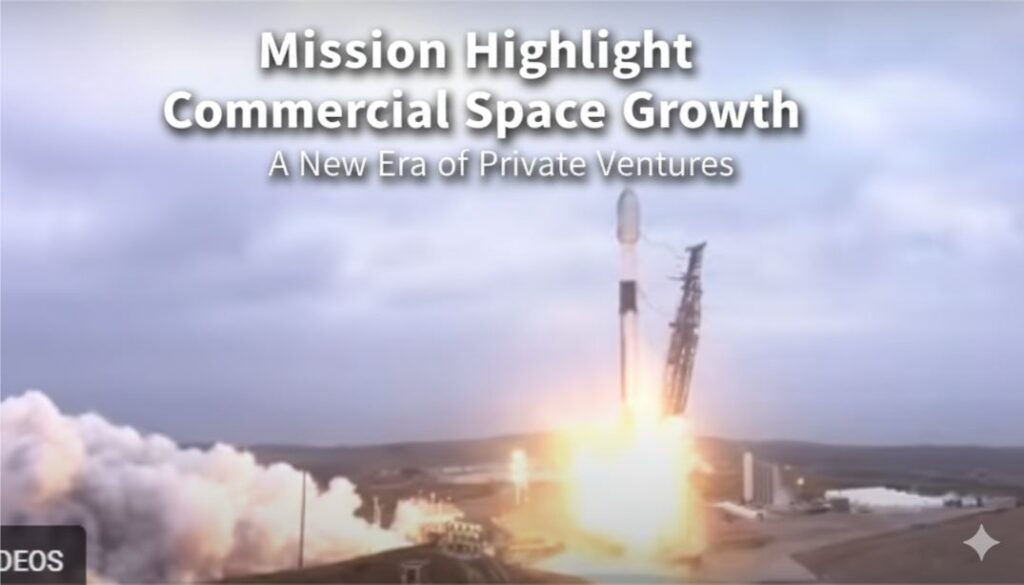
Latest Launch Demonstrates Reusability Economics
SpaceX launched 29 Starlink satellites at 4:41 p.m. EST on January 9 from Space Launch Complex 40 at Cape Canaveral Space Force Station in Florida. The mission utilized Falcon 9 booster B1069, marking its 29th flight and landing.
The rocket’s first stage landed successfully on the autonomous drone ship “Just Read the Instructions” in the Atlantic Ocean approximately 8.5 minutes after liftoff. The 29 satellites deployed to low Earth orbit about 65 minutes after launch.
This launch represents SpaceX’s accelerated cadence following 165 orbital missions in 2025. The company’s ability to reuse boosters dozens of times significantly reduces launch costs compared to traditional aerospace contractors.
SpaceX’s Financial Position and Revenue Growth
SpaceX achieved approximately $15.5 billion in revenue for 2025, according to company CEO Elon Musk. This represents substantial growth from $8.7 billion in 2023, driven primarily by Starlink expansion.
Starlink generated $7.7 billion in 2024, comprising 58% of total revenue, up 83% year-over-year. The satellite internet service has become the company’s largest revenue stream, surpassing traditional launch services.
Industry analysts project SpaceX revenues could reach $22 billion to $24 billion in 2026. This growth trajectory positions the company among the most valuable private enterprises globally, with recent valuations ranging from $800 billion to over $1 trillion.

The company’s launch services division generated approximately $5.5 billion in 2024, maintaining steady demand from government and commercial customers. NASA contracts accounted for roughly $1.1 billion of 2025 revenue.
Starlink Constellation Expansion and Market Position
The Starlink constellation currently consists of more than 9,400 active spacecraft and continues growing. This makes it the largest satellite constellation ever assembled.
The service has surpassed 9 million subscribers globally as of early 2026, providing broadband internet to underserved regions. Subscription revenue, hardware sales, and enterprise contracts drive consistent cash flow for SpaceX operations.
The Federal Communications Commission authorized SpaceX to expand its Starlink constellation to 15,000 satellites on January 8, 2026. This regulatory approval enables further network expansion and service improvements.
SpaceX plans to lower approximately 4,400 satellites from 550 kilometers to 480 kilometers altitude. This adjustment aims to reduce collision risks and improve space safety as satellite density increases in low Earth orbit.
Commercial Space Launch Industry Context
The global commercial space launch market reached $8.2 billion in 2024 and is projected to grow at a 14.6% compound annual growth rate through 2034. Rising demand for small satellite deployments and mega-constellation expansion drives market growth.
SpaceX maintains approximately 82% market share of global commercial launches in 2025, significantly outpacing competitors. The company completed 165 orbital missions in 2025, far exceeding any other launch provider.
The global space economy reached $613 billion in 2024, reflecting 7.8% year-over-year growth, with the commercial sector accounting for 78% of the total. Government space spending contributed the remaining 22%.
Launch costs have decreased dramatically over the past decade. Expenses have fallen from approximately $65,000 per kilogram to as low as $1,500 per kilogram for low Earth orbit payloads, representing more than a 95% reduction.
Competitive Landscape and Market Dynamics
SpaceX faces increasing competition from established aerospace contractors and emerging startups. Blue Origin, Rocket Lab, and United Launch Alliance compete in different market segments.
The commercial space launch market is projected to grow from $14.67 billion in 2024 to $78.02 billion by 2035, at a compound annual growth rate of 16.41%. This expansion creates opportunities for multiple providers.
Amazon’s Project Kuiper represents significant competition to Starlink in the satellite internet market. The service plans to deploy thousands of satellites for global broadband coverage, though it trails SpaceX’s operational timeline.
Traditional aerospace contractors including Boeing, Northrop Grumman, and Lockheed Martin maintain strong positions in government contracts. However, their launch costs typically exceed SpaceX’s reusable rocket economics.
Regulatory Environment and FCC Approval
The Federal Communications Commission’s January 8 authorization to expand the Starlink constellation to 15,000 satellites represents a significant regulatory milestone. This approval enables SpaceX to continue network buildout and service expansion.
FCC Chairman Brendan Carr stated the authorization would deliver unprecedented satellite broadband capabilities and strengthen competition. The agency’s support reflects recognition of satellite internet’s role in bridging digital divides.
SpaceX must navigate complex regulatory frameworks across multiple jurisdictions as it expands globally. Licensing requirements, spectrum allocation, and orbital debris mitigation present ongoing compliance challenges.
Operational Efficiency and Booster Reusability
The January 9 mission’s use of booster B1069 for its 29th flight demonstrates SpaceX’s reusability achievements. Each successful landing and relaunch reduces per-mission costs significantly.
Falcon family boosters have successfully landed 555 times in 568 attempts as of January 9, 2026. This 97.7% landing success rate enables the economic model supporting SpaceX’s high launch cadence.
SpaceX has reflown fairing halves more than 300 times, further reducing hardware costs. The company vertically integrates approximately 70% of Falcon 9 production in-house, controlling costs and supply chains.
Traditional expendable rockets cost significantly more per launch. SpaceX’s reusable approach reduces typical satellite launch costs from approximately $400 million to $62 million, according to industry analysis.
Impact on Satellite Communications Industry
Starlink’s expansion affects traditional satellite communications providers and terrestrial internet service providers. The service competes directly with geostationary satellite operators and challenges rural broadband economics.
Traditional satellite operators like Viasat and Hughes Network Systems face pressure from low Earth orbit constellations. SpaceX’s lower latency and competitive pricing reshape customer expectations.
Telecommunications companies including T-Mobile have partnered with SpaceX for direct-to-cell satellite services. These collaborations extend mobile coverage to areas beyond traditional tower infrastructure.
Enterprise customers increasingly adopt Starlink for maritime, aviation, and remote operations connectivity. This diversification beyond residential subscribers strengthens revenue stability.
Challenges and Risk Factors
SpaceX faces several operational and market challenges despite its dominant position. Orbital debris concerns intensify as satellite populations increase in low Earth orbit.
Launch mishaps, though rare, pose significant financial and reputational risks. The company experienced a Starlink mission failure in 2024, highlighting ongoing engineering challenges.
Competition from well-funded rivals including Amazon could pressure Starlink pricing and market share. Regulatory changes in key markets might restrict operations or impose additional costs.
Starship development delays could affect long-term plans for next-generation satellite deployment. The heavy-lift vehicle remains in testing phases despite progress in 2025.
Government Contracts and NASA Partnerships
SpaceX maintains substantial government contracts beyond Starlink operations. NASA partnerships include Commercial Crew Program flights to the International Space Station and lunar mission support.
The company secured contracts for Artemis program lunar lander development. These agreements provide stable long-term revenue alongside commercial activities.
U.S. Space Force and Department of Defense contracts support national security satellite launches. These missions typically command premium pricing compared to commercial deployments.
Government relationships provide credibility and financial stability that support ambitious development programs. However, dependence on government contracts creates exposure to policy changes.
Market Implications for Investors
SpaceX remains privately held, limiting direct investment opportunities for retail investors. The company conducts periodic employee stock sales and private funding rounds at valuations approaching $1 trillion.
Speculation about a potential initial public offering intensified in late 2025, though no timeline has been confirmed. An IPO could value the company between $800 billion and $1.5 trillion according to market analysis.
Google parent company Alphabet holds approximately 7% of SpaceX shares. Alphabet shareholders gain indirect exposure to SpaceX’s growth through this investment.
Some investment funds hold SpaceX positions through private market transactions. ARK Venture Fund and Destiny Tech100 provide limited public market exposure to SpaceX equity.
Economic Impact and Job Creation
SpaceX’s operations support thousands of direct employees across manufacturing, launch operations, and engineering roles. The company’s growth has created aerospace employment in Texas, California, and Florida.
Supply chain partners benefit from SpaceX’s high production volumes. Component manufacturers, materials suppliers, and service providers participate in the company’s ecosystem.
Regional economies around launch facilities experience economic activity from SpaceX operations. Cape Canaveral and Starbase in Texas have seen increased commercial development.
The company’s success has inspired new space startups and attracted venture capital to the industry. This multiplier effect extends economic impact beyond SpaceX’s direct operations.
Technology Development and Innovation
SpaceX’s next-generation Starship rocket continues development for heavy-lift missions. The fully reusable system aims to reduce costs further and enable Mars exploration.
SpaceX plans to introduce Starlink Version 3 satellites in 2026, launching them aboard Starship. These advanced satellites would provide over 10 times the downlink capacity of current generation units.
Raptor engine development for Starship represents significant engineering advancement. The methane-fueled engines offer improved performance and reusability compared to Falcon 9’s Merlin engines.
Direct-to-cell capabilities in newer Starlink satellites eliminate the need for ground-based cellular infrastructure in some applications. This technology expands addressable markets beyond traditional broadband.
Outlook and Future Trajectory
SpaceX’s position in commercial spaceflight appears secure for the near term given its operational advantages and market share. The company’s reusability economics create substantial competitive barriers.
Starlink’s subscriber growth and service expansion should continue driving revenue increases through 2026. International market penetration remains a significant growth opportunity.
Regulatory approvals for constellation expansion enable continued network buildout. Additional satellite deployments will improve service quality and capacity.
Long-term success depends on maintaining operational excellence, managing competition, and executing on next-generation technology development. The company’s track record suggests strong execution capability.
Industry analysts anticipate continued growth in commercial space activities as launch costs decline and new applications emerge. SpaceX’s operational performance and financial results position the company as a central player in this expanding industry. The January 9 launch represents routine operations for a business that has fundamentally transformed access to space over the past decade.
This article is for informational purposes only and does not constitute financial or investment advice. Market conditions and company performance may change. Readers should conduct their own research or consult financial advisors before making investment decisions.