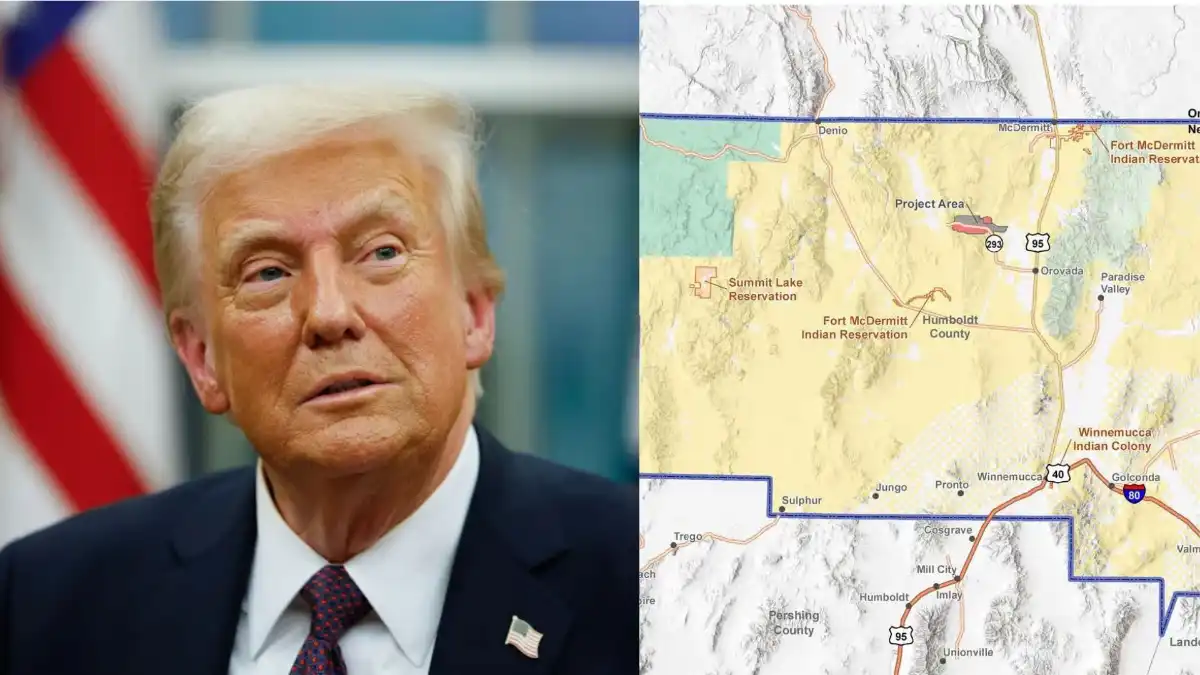
A senior Interior Department official is under scrutiny after records showed her husband profited from a multimillion‑dollar water‑rights deal linked to the Trump administration’s approval of the Thacker Pass lithium mine in Nevada.The arrangement, which was not fully detailed in government disclosure forms, has triggered concerns among ethics experts about conflicts of interest inside an agency central to U.S. energy transition policy.
Why the lithium mine case matters
The controversy centers on Thacker Pass, a planned large‑scale lithium project in northern Nevada that is considered one of the most significant potential domestic sources of lithium for electric vehicle and battery manufacturing.
As the United States seeks to secure critical minerals for clean energy and reduce reliance on foreign suppliers, questions over ethics and transparency at the Interior Department highlight the tension between rapid project approvals and safeguards for public integrity.
Trump administration and Thacker Pass
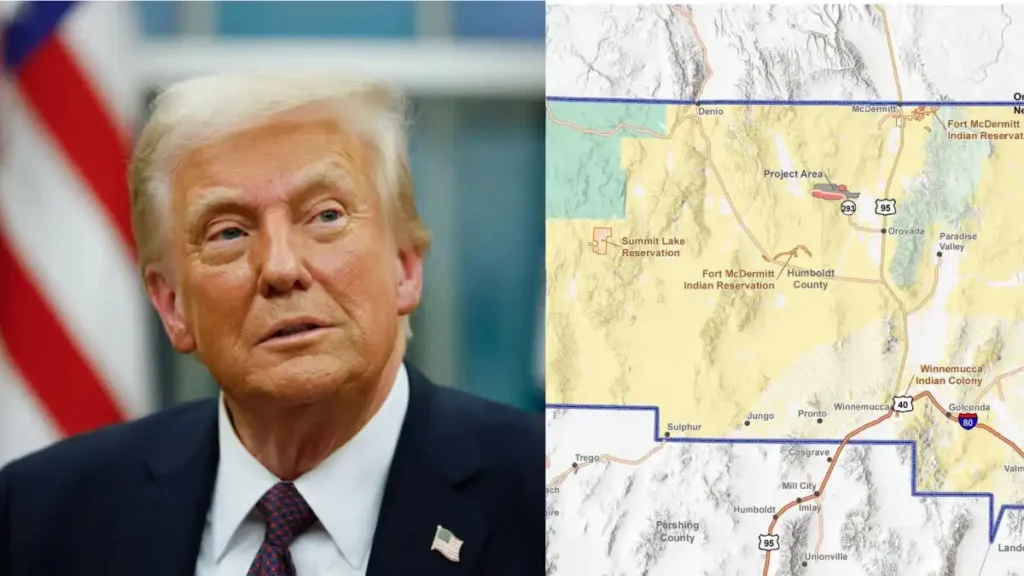
Thacker Pass, located in Humboldt County, Nevada, is being developed by Lithium Nevada Corp., a subsidiary of Lithium Americas, as a shallow open‑pit mine and processing facility producing battery‑grade lithium carbonate.
The Trump administration’s Interior Department moved the project through a “fast‑track” review process, issuing key approvals in the final weeks of the first Trump term to accelerate domestic production of critical minerals.
Lithium demand has surged as automakers expand electric vehicle output and grid‑scale storage, with U.S. policymakers across administrations classifying lithium as a strategic mineral.
Today the United States still imports the vast majority of its lithium needs, largely from South America and China, making large projects such as Thacker Pass central to ambitions for a more resilient battery supply chain.
Key facts on the official, the deal, and disclosures
According to state and federal records, attorney and rancher Frank Falen, whose family operates Home Ranch in northern Nevada, agreed in 2018 to sell water rights from the ranch to Lithium Nevada Corp. for a deal valued at about 3.5 million dollars.
The water was needed to support the planned 2.2 billion dollar Thacker Pass mine, which requires significant volumes of water for processing and operations in a dry region.
At the time of the agreement, Mr. Falen’s wife, Karen Budd‑Falen, held a senior legal role at the Interior Department as deputy solicitor overseeing wildlife issues, and later returned to the department as associate deputy secretary, the third‑ranking position at the agency.
The water‑rights contract reportedly included language allowing the mining company to terminate the deal if federal authorities declined to grant crucial permits, effectively tying the family’s financial outcome to Interior’s regulatory decisions.
Public records and press reports indicate that Ms. Budd‑Falen’s financial disclosure forms listed the family ranch as an asset but did not explicitly describe the multimillion‑dollar water‑rights contract or fully reflect the income flows associated with it.
Earlier filings were reported to show relatively small annual income from the ranch, while a later disclosure, filed after her return to government service, noted that the asset was generating more than one million dollars without specifying the source.
In November 2019, roughly two years before Thacker Pass received a key permit, Ms. Budd‑Falen met with executives from Lithium Americas for lunch at Interior headquarters, though the company has said mine‑specific issues were not discussed.
Lithium Americas representatives have stated that the firm did not work directly with Ms. Budd‑Falen on project approvals and that its dealings on the water‑rights contract were with Mr. Falen and other ranch co‑owners.
Ethics concerns and expert viewpoints
Ethics specialists say the undisclosed family financial link to a project under Interior’s authority raises questions about whether conflict‑of‑interest rules and disclosure obligations were properly followed.
Under federal ethics regulations, senior officials must recuse themselves from matters that could have a direct and predictable effect on their own or their immediate family’s financial interests, unless a written waiver is granted.
Experts quoted in recent coverage argue that even the appearance of a conflict can undermine public trust in environmental and energy decisions, especially for high‑profile projects framed as strategically important.
Good‑governance advocates say comprehensive, timely financial disclosures and clear documentation of recusals or ethics waivers are critical to ensuring that major permitting decisions are based on law and policy rather than private gain.
The Interior Department has declined to say publicly whether Ms. Budd‑Falen recused herself from any Thacker Pass matters or whether any ethics waivers were issued, and requests for related documentation have so far gone unanswered, according to reporting by multiple outlets.
Environmental and Indigenous rights groups that have opposed the mine say the lack of clarity over ethics compliance adds to their concerns about the project’s approval process.
Economic and market significance of Thacker Pass
Thacker Pass is expected to produce around 40,000 tonnes per year of battery‑quality lithium carbonate in its first phase, with potential for higher output over time, positioning it among the largest lithium operations in North America.
Analysts note that this level of production could support batteries for hundreds of thousands of electric vehicles annually and materially increase U.S. domestic lithium supply.
Industry reports describe the project as a cornerstone of efforts to bring more of the battery materials value chain onshore, from mining through refining, to reduce exposure to global supply disruptions and geopolitical risks.
Public and private financing, including a multibillion‑dollar federal loan commitment for mine development and processing facilities, underscores how central the project has become to national energy‑transition policy.
However, the case also illustrates how strategic industrial initiatives can intersect with longstanding debates about land use, water allocation, and the governance of public resources in the American West.
Local ranchers and community groups have raised concerns about water consumption, environmental impacts, and the broader implications of shifting agricultural water rights to industrial mining.
Risks, challenges, and regulatory scrutiny
Beyond ethics issues, Thacker Pass faces legal and regulatory challenges linked to environmental impacts, cultural resources, and water use in an arid basin.
Court cases and regulatory reviews have focused on compliance with federal laws governing public lands, wildlife, and Indigenous consultation.
Water use remains a central concern, with project documents indicating thousands of acre‑feet of water per year could be required at full operation, equivalent to billions of gallons annually.
Critics argue that diverting water from ranching to mining could stress local aquifers and ecosystems, while the developer points to mitigation and recycling measures to limit overall consumption.
From a governance standpoint, the unresolved questions around disclosures and recusals for senior officials represent an additional layer of risk for agencies seeking to defend their decisions in court and before Congress.
Transparency shortfalls can also complicate future permitting efforts if they prompt tighter oversight, additional documentation requirements, or delays in related approvals.
Read Also ;
Interior Nominee’s Undisclosed Deal Raises Climate Questions
Implications for businesses, communities, and policy
For mining companies and clean‑energy supply‑chain participants, the episode underscores the importance of robust compliance and documentation when projects depend on high‑level regulatory approvals.
Clear separation between corporate negotiations and officials with potential personal or family interests is seen by governance practitioners as essential to avoiding delays, reputational damage, or policy reversals.
Communities near large mineral projects face a complex mix of potential economic benefits and environmental or cultural costs, and trust in federal decision‑making is a key factor in how those trade‑offs are perceived.
Questions over whether senior officials fully disclosed relevant financial ties can intensify local skepticism, even when agencies maintain that permitting decisions followed statutory standards.
At the policy level, the case may feed into broader debates in Washington over ethics enforcement, disclosure rules, and how to balance rapid build‑out of critical‑mineral infrastructure with safeguards for public accountability.
Lawmakers have periodically revisited ethics frameworks for executive‑branch officials, and new controversies involving strategic industries can influence future legislative or administrative reforms.